
21 October 2026. The future of democracy may depend less on our political systems than on our capacity to grow into the complexity they require.
Democracy rests on an assumption that is rarely examined: that citizens are capable of forming independent judgments, navigating complexity and taking responsibility for the societies they help shape.
But what happens when our collective capacity for dealing with complexity fails to keep pace with the challenges confronting us?
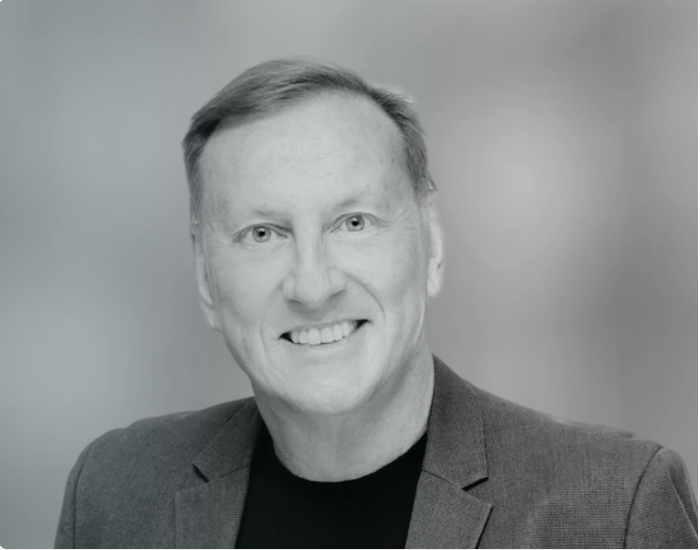
In this episode of the Inner Pioneers Podcast, I speak with Tomas Björkman, author of The Nordic Secret and founding chair of the Inner Development Goals, about the relationship between individual development, societal transformation and the future of democracy.
A society can only be as mature as its citizens
One of the central ideas in Tomas's work is that societies can only handle as much complexity as their citizens are capable of holding internally. Democratic systems require more than formal institutions and voting procedures. They depend on people who can think independently, tolerate uncertainty, question their own assumptions and engage with perspectives different from their own.
When these capacities are underdeveloped, we become more susceptible to simple explanations, polarising narratives and strong leaders who promise certainty. This is not merely a political problem, it’s also a developmental one.
The inner compass and the courage to think independently
Tomas traces his own journey from growing up on a Swedish family farm to a career in banking and eventually becoming involved in a range of social entrepreneurship initiatives. A recurring theme is the development of what he calls an inner compass: the capacity to distinguish our own values and convictions from the expectations of our families, peers and wider culture.
In developmental psychology, this connects to the transition towards self-authoring ways of making meaning - becoming increasingly capable of examining inherited beliefs rather than simply living within them. This capacity is essential not only for personal autonomy but also for democratic societies.
If we primarily think and act according to the opinions of our immediate social environment, public discourse becomes increasingly vulnerable to manipulation.
From personal development to collective transformation
We also discuss the Inner Development Goals, an initiative that seeks to strengthen the inner capacities needed to achieve the United Nations' Sustainable Development Goals. The underlying insight is compelling: external transformation requires corresponding inner capacities.
Addressing complex global challenges demands qualities such as perspective-taking, collaboration, systems thinking, self-awareness and the ability to navigate uncertainty. These are not optional extras. They are part of the infrastructure of meaningful societal change.
The developmental challenge of our time
Perhaps the most important question emerging from our conversation is whether we are investing enough in the development of the people who are expected to navigate our increasingly complex world. We spend enormous resources on technological innovation, institutional reform and economic development. But how much attention do we give to the inner development that allows us to use these resources wisely?
The future of democracy may depend on our willingness to take this question seriously.
The invitation: What if the most important contribution we can make to the future of democracy is to become more capable of participating in it?
Listen to the full conversation: Tomas Björkman – Why Democracy Can't Survive Without Inner Growth
Thank you, Tomas, for bringing together developmental psychology, social entrepreneurship and the future of our democratic societies in such an inspiring conversation.