
May 20, 2026. The invisible ways our early experiences shape how we lead, take responsibility and relate to power.
We like to think that leadership is primarily a matter of experience, competence and conscious decision-making. Yet many of the patterns that shape how we lead are considerably older than our professional careers.
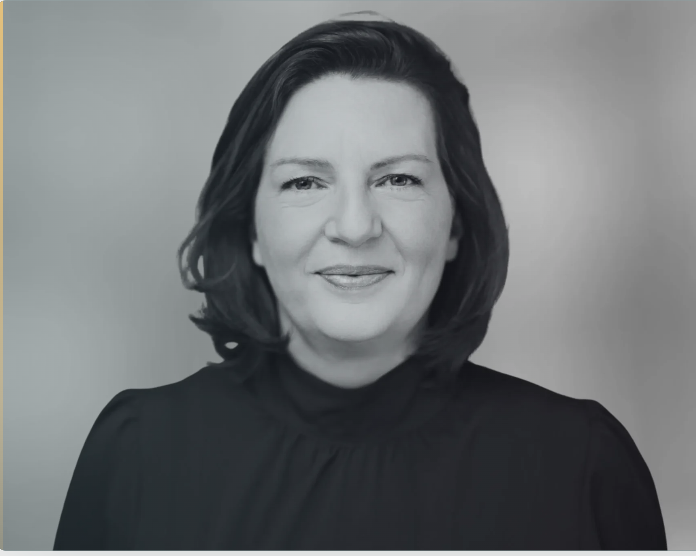
In this episode of the Inner Pioneers Podcast, I speak with Constanze Buchheim, founder of executive search company i-potentials and an experienced advisor to leaders and organisations. We explore how childhood experiences, emotional conditioning and unconscious relational dynamics continue to influence even highly accomplished executives.
When childhood strategies become leadership patterns
Constanze shares how her own relationship with responsibility was shaped by experiences in her family. While she had founded and successfully led a company, a part of her still struggled with the very responsibility that came with being its CEO.
A pivotal experience during a coaching process in the mountains helped her recognise where this ambivalence originated - and distinguish the voice of a younger part of herself from the choices she wanted to make as an adult.
This is a powerful reminder: professional success does not necessarily mean that we have outgrown the patterns that helped us navigate childhood.
In fact, our greatest strengths can sometimes be extensions of old survival strategies. The drive to achieve, the need for recognition or the tendency to take responsibility for everything may be rooted in much earlier experiences.
The three spaces of mature leadership
One particularly interesting concept in our conversation is Constanze's distinction between three relational spaces:
The I-space: What is my perspective, and what is my responsibility?
The You-space: What belongs to the other person?
The We-space: What are we creating together in our relationship?
Mature leadership requires the ability to move consciously between these perspectives.
Leaders who remain exclusively in their own perspective risk becoming disconnected from the people around them. Those who focus too much on the collective may neglect their own boundaries and responsibilities. The challenge is then to hold all three simultaneously.
Intuition is not the opposite of intelligence
We also discuss why intuition deserves a more prominent place in leadership. In complex and rapidly changing environments, relying exclusively on historical data and analytical reasoning can be insufficient.
Constanze makes a compelling case for recognising the intelligence embedded in our experiences, emotions and bodies - while remaining able to reflect critically on it. Leadership maturity, in this sense, involves integrating different forms of intelligence rather than privileging one at the expense of the others.
The invitation: What if some of the challenges you experience as a leader are not primarily professional challenges, but patterns that originated much earlier in your life?
Listen to the full conversation: Constanze Buchheim – Why Most Leaders Are Still Ruled by Their Childhood
Thank you, Constanze, for bringing so much honesty and depth to a conversation about the often invisible forces shaping leadership. Find all Inner Pioneers Podcast Episodes here.